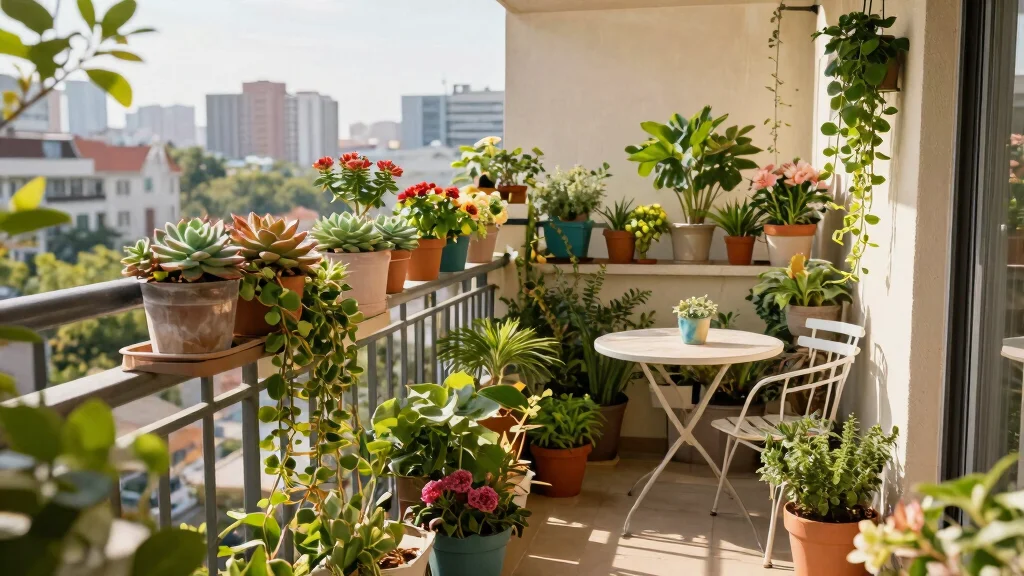
If you’re looking to brighten up your balcony but feel limited by space and sunlight, you’re not alone. Many city dwellers face the challenge of creating a lush green retreat in small, low-light areas. That’s why I’ve put together this list of 15 balcony plants ideas that not only thrive in confined spaces but also flourish in lower light conditions. This guide is for anyone who dreams of adding a touch of nature to their urban lifestyle, whether you’re a seasoned gardener or just starting out.
In this post, you’ll discover a variety of plants that are perfect for container gardening on your balcony. From hardy ferns to fragrant herbs, each plant offers a unique vibe and aesthetic. You’ll find options that require minimal maintenance, making your balcony space not just a garden but a personal oasis. By the end, you’ll have the inspiration and know-how to transform your small balcony into a green sanctuary filled with life and beauty.
So, whether you’re seeking to cultivate some fresh herbs for cooking, or simply want to enjoy the calming presence of greenery, this list is filled with urban gardening tips and practical advice on balcony plant care. Let’s dive into these delightful balcony plants that can thrive in even the smallest of spaces!
Key Takeaways
– Explore a variety of plants that thrive in low light and small spaces, perfect for urban living.
– Discover specific plant types like ferns, pothos, and herbs that require minimal care and bring greenery to your balcony.
– Learn practical tips on container gardening that can maximize your space and enhance aesthetics.
– Find insights on how to care for each plant type to ensure they flourish in your urban environment.
– Gain inspiration to create a personal green retreat that not only beautifies but also improves your living space.
1. Ferns – Lush and Low Maintenance
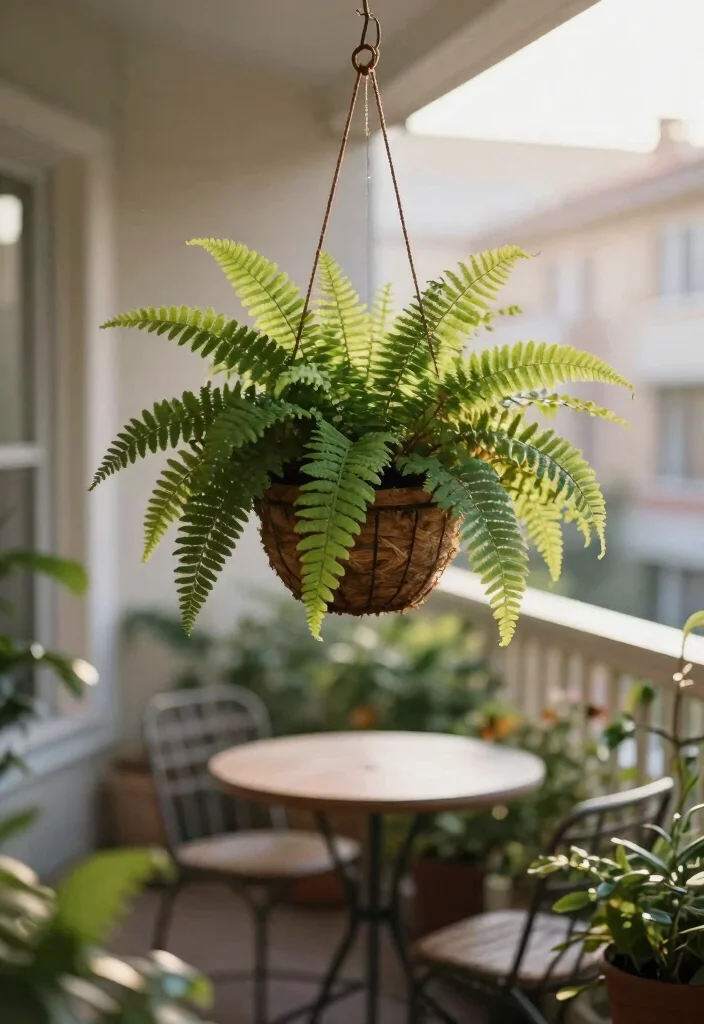
Ferns are ideal for balcony gardens where light is limited. Their delicate fronds bring a lushness that enhances the charm of any small space. Varieties like the Boston Fern and Maidenhair Fern thrive in partial shade, making them perfect for your cozy balcony retreat.
Keep these green wonders happy by ensuring consistent moisture in the soil and misting their leaves to boost humidity. You can also use hanging baskets to showcase their beautiful trailing leaves while saving floor space.
Key tips for growing ferns:
– Maintain moist soil without overwatering.
– Mist leaves for added humidity.
– Use hanging planters for a stunning display.
With their air-purifying qualities, ferns not only beautify your balcony but also promote a healthier living environment.
2. Pothos – The Trailing Marvel
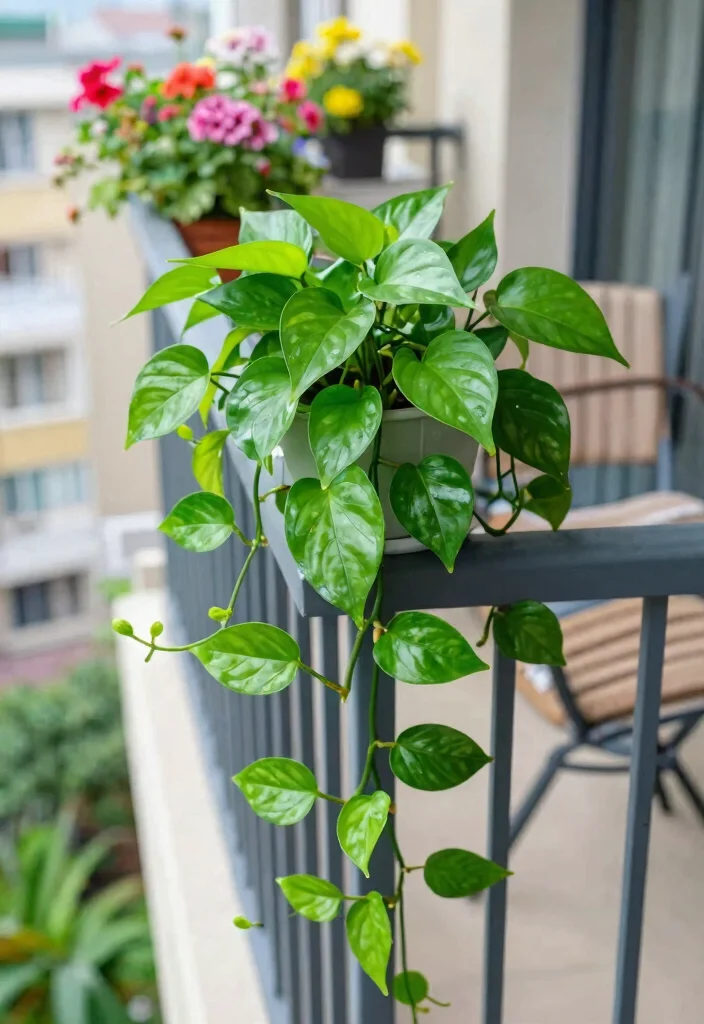
Pothos plants are a fantastic choice for adding greenery to your balcony. Their trailing vines can transform any railing into a lush display, making it perfect for small spaces. These plants thrive in low light, so they are ideal for shaded corners of your balcony.
To keep your Pothos thriving, consider using a trellis or allowing them to cascade over the edges of planters. Water them when the top inch of soil feels dry, and don’t forget to prune regularly for fuller growth.
Essential care tips for Pothos:
– Use a trellis or let them trail down.
– Water when the soil feels dry.
– Prune for bushier growth.
With their attractive heart-shaped leaves, Pothos adds elegance and vibrancy to your outdoor space.
3. Spider Plants – Airy and Adaptable
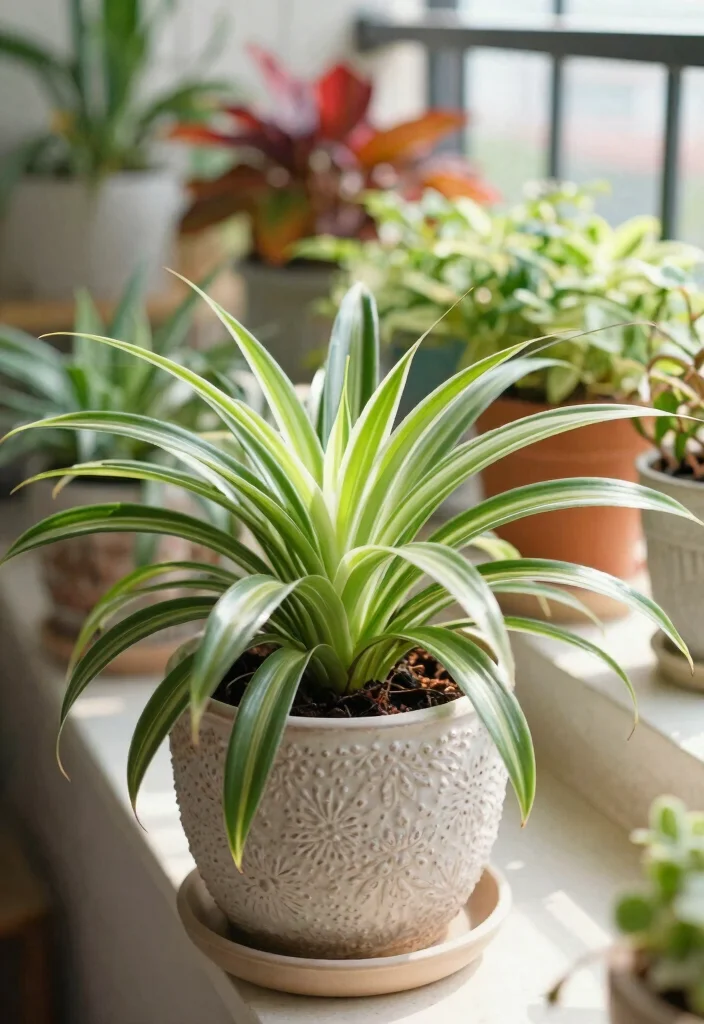
Spider plants infuse a playful charm into your balcony garden. Their arching leaves and baby ‘spiderettes’ create a whimsical touch while thriving in low light. They are perfect for beginners and great air purifiers, making them an excellent choice for urban dwellings.
To ensure your spider plants thrive, water them thoroughly but let the soil dry out between waterings. Use well-draining pots to prevent root rot, and rotate the pot for even light exposure.
Care tips for spider plants:
– Water thoroughly, allowing soil to dry out.
– Use well-draining pots to avoid rot.
– Rotate for even light exposure.
With their ease of care and delightful appearance, spider plants are a must-have for any small garden enthusiast.
4. Succulents – Drought-Resistant Beauties
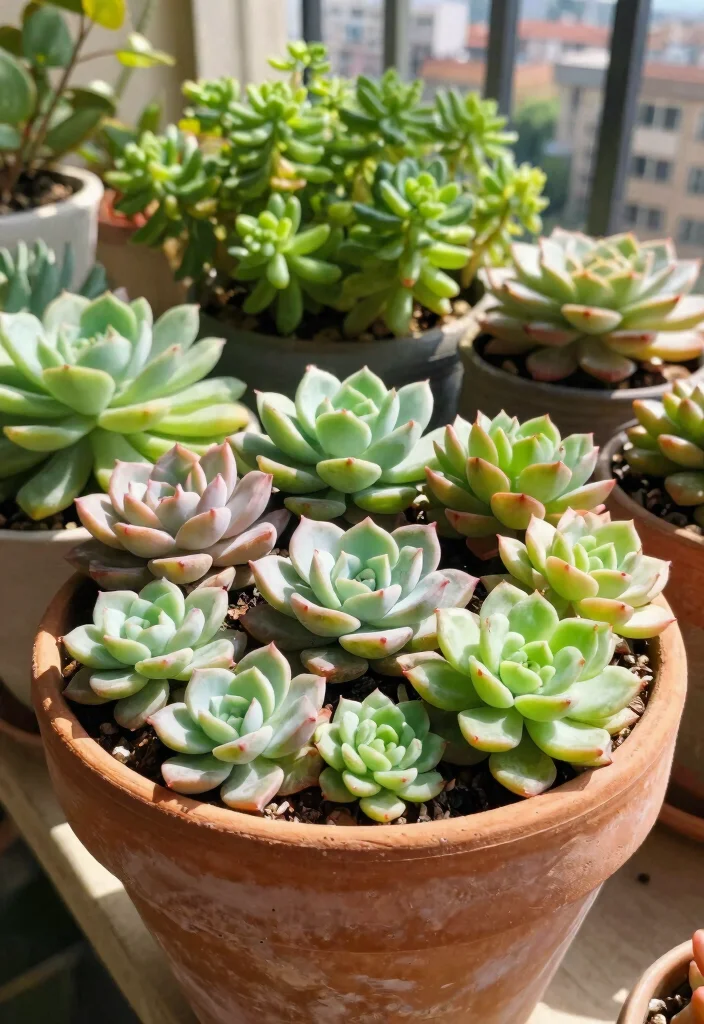
Succulents have become a beloved favorite among gardeners for their unique shapes and vibrant colors. These hardy plants thrive with minimal care, making them perfect for busy lifestyles and small spaces.
For your balcony, consider creating a container garden with various succulent types. Use a lightweight potting mix to enhance drainage and water sparingly, as these plants store moisture in their leaves.
Simple care tips for succulents:
– Use lightweight potting mix for drainage.
– Water sparingly; they store water in leaves.
– Group them for visual appeal.
With their resilience and charming looks, succulents are the champions of small space gardening.
Fun fact: balcony plants ideas enthusiasts will love that many succulents store water in their leaves, letting you skip watering for up to two weeks on busy balconies. Use a lightweight potting mix for better drainage, and water sparingly. With minimal care, your drought-resistant beauties thrive in small spaces.
Ongoing Maintenance & Care Guide
Maintenance Schedule:
Daily/Weekly Tasks:
– Water your plants if the top inch of soil feels dry. This usually takes about 5-10 minutes.
– Check for any yellowing leaves or pests. Spend around 5 minutes each time you’re out on your balcony.
– Rotate pots every few weeks to ensure even light distribution. This task will take about 5 minutes.
– Clean the plant leaves with a damp cloth to remove dust. Allocate 10-15 minutes for this task.
Monthly/Seasonal Tasks:
– Fertilize your balcony plants with a balanced liquid fertilizer every month. This should take around 10-15 minutes.
– Repot plants that have outgrown their containers. This can take 30-60 minutes, depending on the number of plants.
– Trim back any overgrown foliage to promote healthier growth. Dedicate about 15-20 minutes for this task.
– Inspect for signs of disease or pests thoroughly. Spend about 15-20 minutes checking each plant.
– Adjust watering schedules based on seasonal changes—more frequent in summer, less in winter. This can be around 5 minutes.
Maintenance Summary Table:
| Task | Frequency | Difficulty | Time Needed |
|——————————|————-|————|—————|
| Watering | Daily/Weekly| Easy | 5-10 minutes |
| Check for pests | Daily/Weekly| Easy | 5 minutes |
| Rotate pots | Every few weeks| Easy | 5 minutes |
| Clean leaves | Weekly | Easy | 10-15 minutes |
| Fertilize | Monthly | Easy | 10-15 minutes |
| Repot | Seasonally | Moderate | 30-60 minutes |
| Trim back | Monthly | Easy | 15-20 minutes |
| Inspect for disease/pests | Monthly | Easy | 15-20 minutes |
| Adjust watering | Monthly | Easy | 5 minutes |
Common Issues to Watch For:
⚠️ Yellowing Leaves: This can indicate overwatering or nutrient deficiencies. Check the soil moisture and consider fertilizing.
⚠️ Wilting Plants: If your plants look droopy, they may need more water. Check soil moisture immediately.
⚠️ Pest Infestations: Look for tiny bugs or webbing on leaves. If you spot any, treat with insecticidal soap.
⚠️ Brown Leaf Tips: This might mean low humidity or under-watering. Increase humidity or adjust your watering schedule.
⚠️ Leaf Drop: If leaves are falling off, this could signal stress from temperature changes or too much direct sunlight. Monitor their environment closely.
Care Tips:
💡 Choose the Right Containers: Ensure your pots have drainage holes. This helps prevent root rot and keeps plants healthy.
💡 Group Plants Together: Arrange plants by similar light and water needs. This can create a microenvironment that benefits all your balcony plants.
💡 Monitor Light Levels: Since you’re in a low-light situation, consider using reflective surfaces to maximize light. Mirrors or light-colored walls can help.
💡 Use Quality Soil: Invest in a good quality potting mix designed for container gardening. It provides essential nutrients and retains moisture better.
💡 Be Mindful of Temperature: Keep plants away from extreme temperatures, such as nearby heaters or air conditioning units. Maintaining a stable environment helps them flourish.
5. Herbs – Fresh and Fragrant
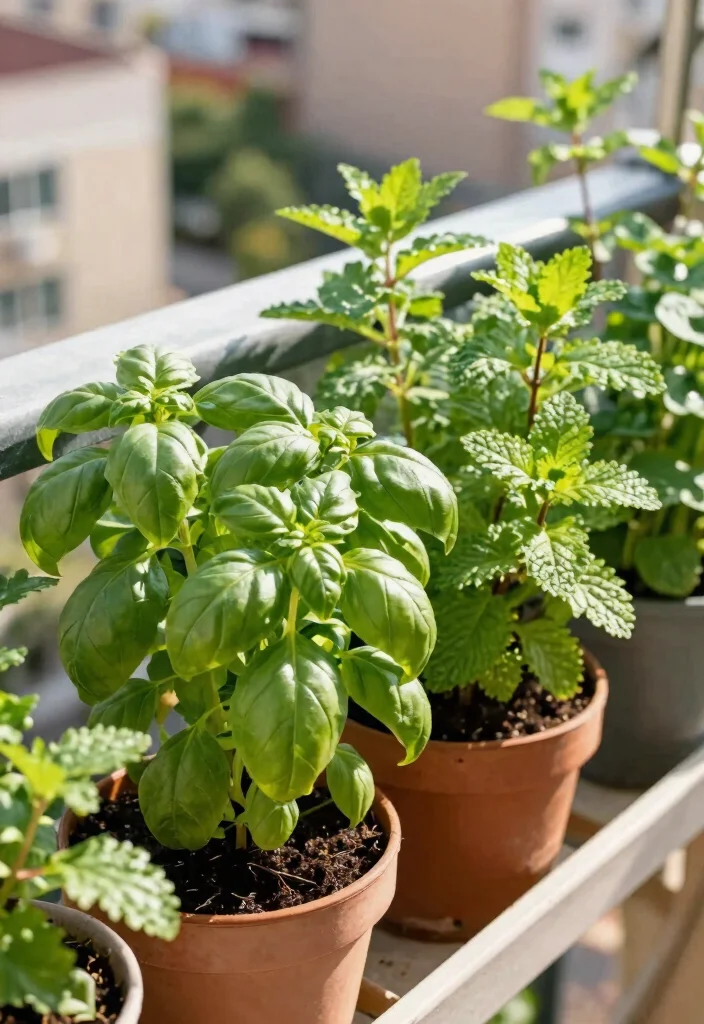
Herbs can elevate your balcony garden with their delightful aromas and practical uses. Imagine snipping fresh basil or mint to enhance your culinary creations! Many herbs flourish in low light, making them perfect companions for urban gardens.
Popular herbs to consider include basil, which loves warm temperatures, mint, which can be invasive and should be kept in pots, and parsley, which thrives in containers for continuous harvesting.
Key herb choices:
– Basil: Needs warmth and moderate watering.
– Mint: Thrives in light or shade; keep in pots.
– Parsley: Grows well in containers; harvest continually.
By placing herbs along your balcony railing or on sunny ledges, you’ll not only beautify your space but also elevate your cooking.
6. ZZ Plant – The Indestructible
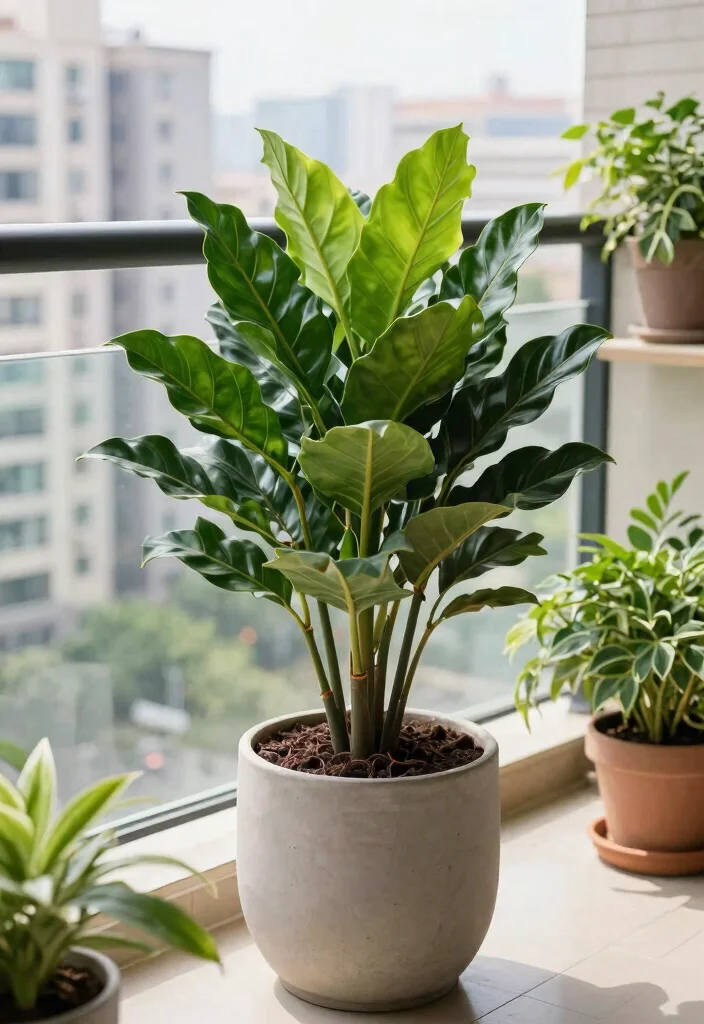
For those who often forget to water their plants, the ZZ plant is the perfect solution. With its glossy green leaves and upright growth, it’s both stylish and resilient. ZZ plants thrive in low light and can tolerate drought, making them ideal for busy city dwellers.
To care for your ZZ plant, let the soil dry out completely before watering. Place it in indirect light, and occasionally dust the leaves to keep them looking fresh.
Care tips for ZZ plants:
– Allow soil to dry out before watering.
– Position in indirect light for best growth.
– Dust leaves regularly for a fresh look.
With their durability, ZZ plants are a favorite among urban gardeners seeking low-maintenance greenery.
7. Chinese Evergreen – Colorful Foliage
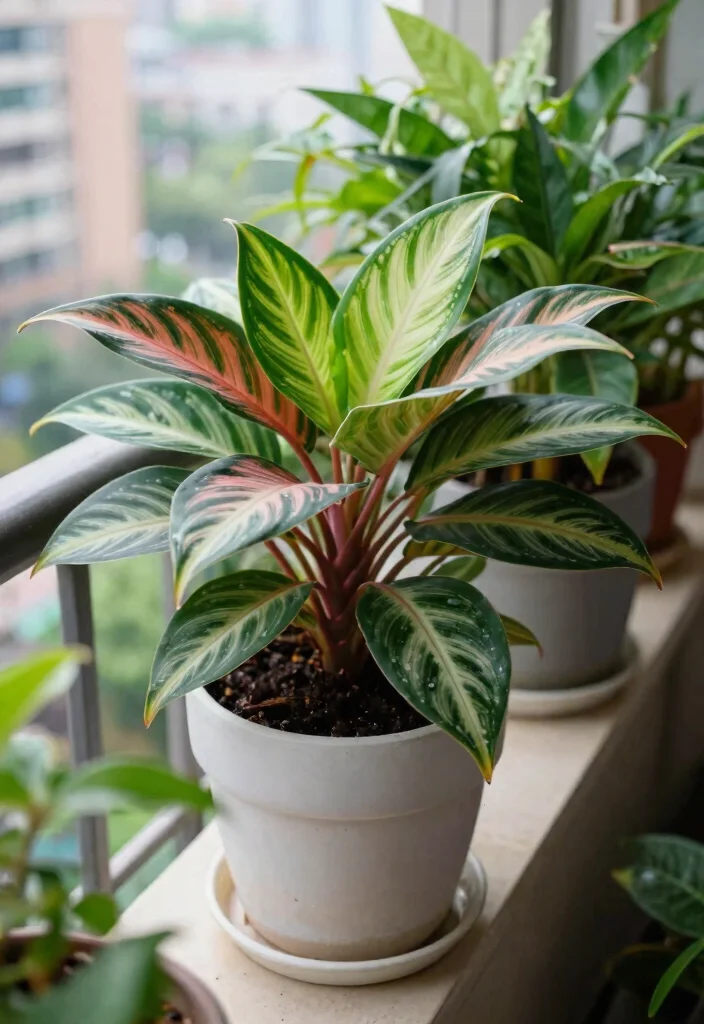
Chinese Evergreens bring vibrant colors and intricate patterns that can greatly enhance your balcony. These plants are known for their striking leaves, which come in various shades, adding visual interest to your space.
They thrive in low light, making them suitable for beginners and adaptable to different environments. Regular watering and proper care will keep them healthy and thriving.
Care instructions for Chinese Evergreens:
– Water when the top inch of soil is dry.
– Avoid direct sunlight to prevent leaf scorch.
– Fertilize during the growing season for best results.
With their stunning appearance, these plants are sure to become eye-catching features on your balcony.
8. Peace Lily – Elegant Blooms
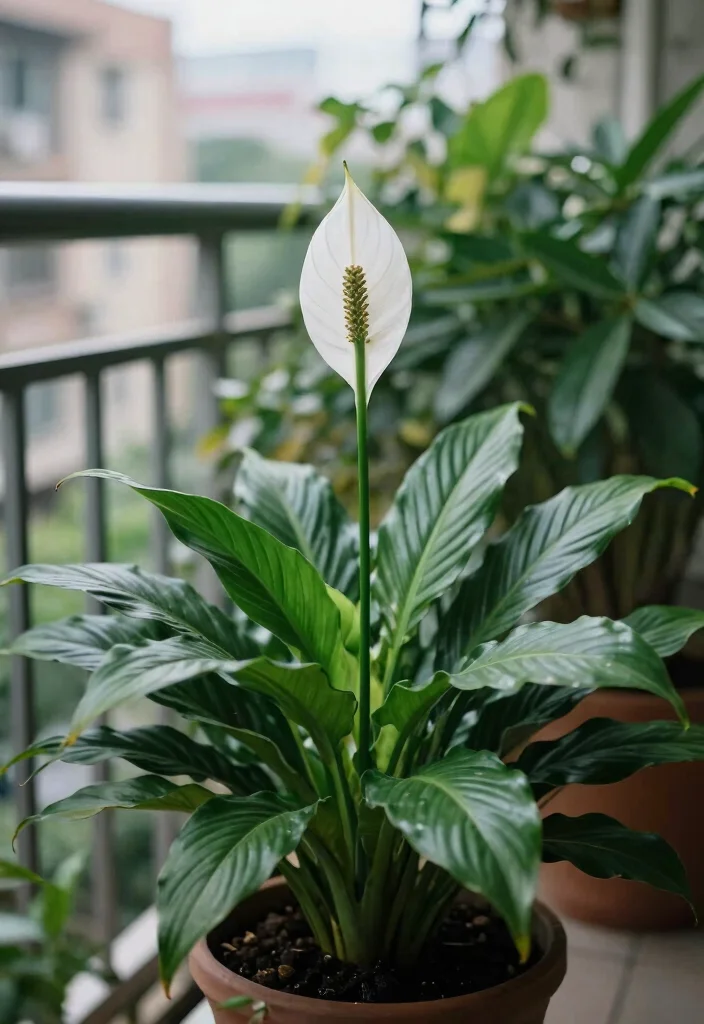
Peace Lilies epitomize elegance with their beautiful white blooms and lush green leaves. They make a striking addition to any balcony, bringing a serene touch to your outdoor space. These indoor plants thrive in low light and can tolerate some neglect, making them easy to care for.
To keep your Peace Lily flourishing, water it regularly, allowing the soil to dry out slightly between waterings. Keep it in a shady area to protect it from direct sunlight, and wipe the leaves with a damp cloth to keep them dust-free.
Care tips for Peace Lilies:
– Water regularly, letting soil dry slightly.
– Keep in a shaded area to avoid sunburn.
– Wipe leaves to keep them clean and healthy.
With their lovely flowers, Peace Lilies add tranquility to your urban oasis.
9. Calathea – Exotic Touch
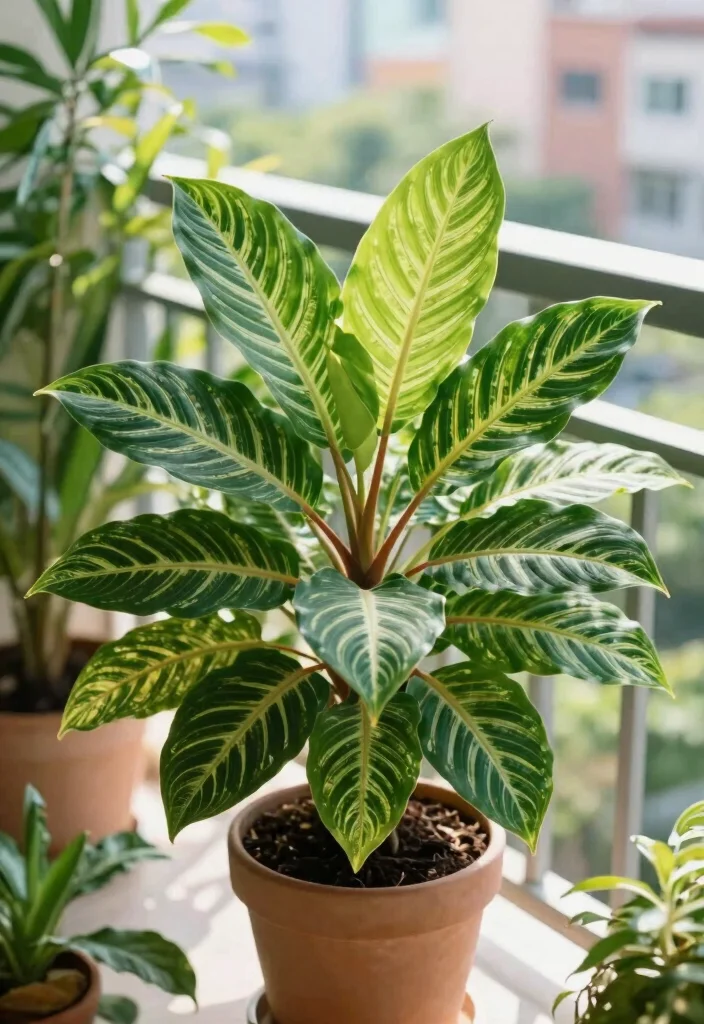
Calatheas are known for their stunning leaf patterns and vibrant colors, making them a perfect choice for a tropical vibe on your balcony. They thrive in low light and love humidity, creating a mini jungle effect in small urban spaces.
To care for your Calatheas, mist the leaves regularly to maintain humidity and keep the soil consistently moist but not soggy. Avoid direct sunlight to preserve their vibrant colors and prevent damage.
Essential care tips for Calatheas:
– Mist leaves often to boost humidity.
– Keep soil moist but avoid sogginess.
– Protect from direct sunlight for vibrant colors.
With their unique foliage, Calatheas will surely catch everyone’s attention.
10. Dracaena – Striking Silhouette
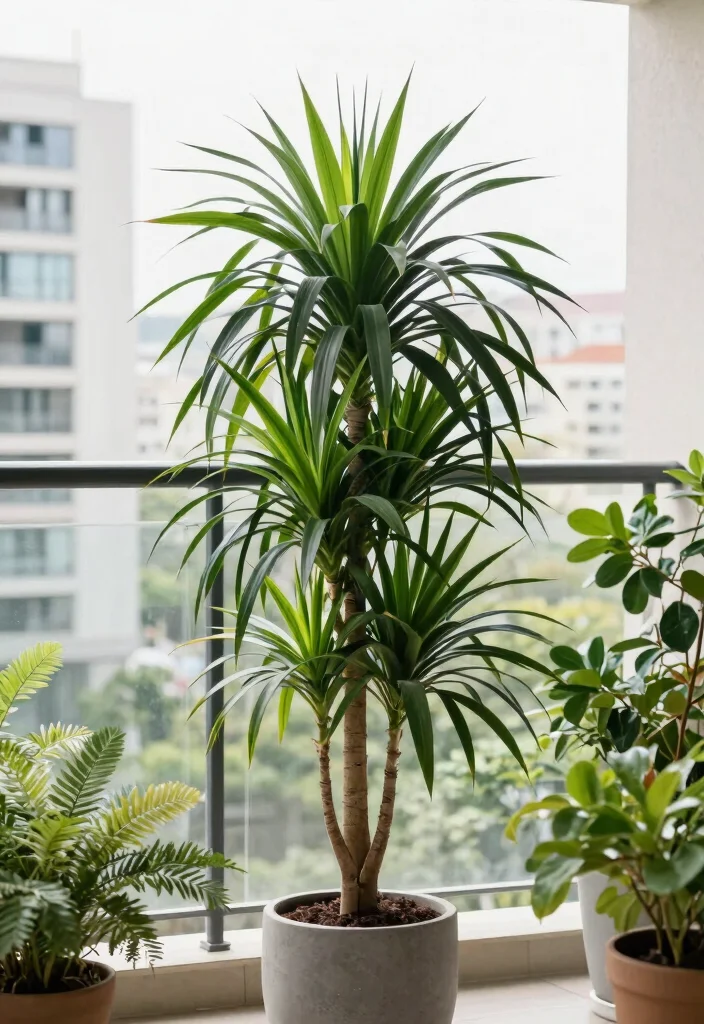
Dracaena plants offer a stunning architectural presence with their long, slender leaves. These hardy plants adapt well to low light, making them perfect for various urban environments. Some varieties can grow tall, creating a beautiful focal point in your small garden.
To care for Dracaenas, allow the soil to dry out between waterings to prevent root rot. Position them in indirect light for optimal growth, and dust the leaves occasionally to maintain their vibrancy.
Care tips for Dracaenas:
– Let soil dry out between waterings.
– Position in indirect light for best growth.
– Dust leaves occasionally to keep them vibrant.
With their striking silhouette, Dracaenas are ideal for busy city dwellers who desire impressive greenery.
11. Bamboo – A Touch of Zen
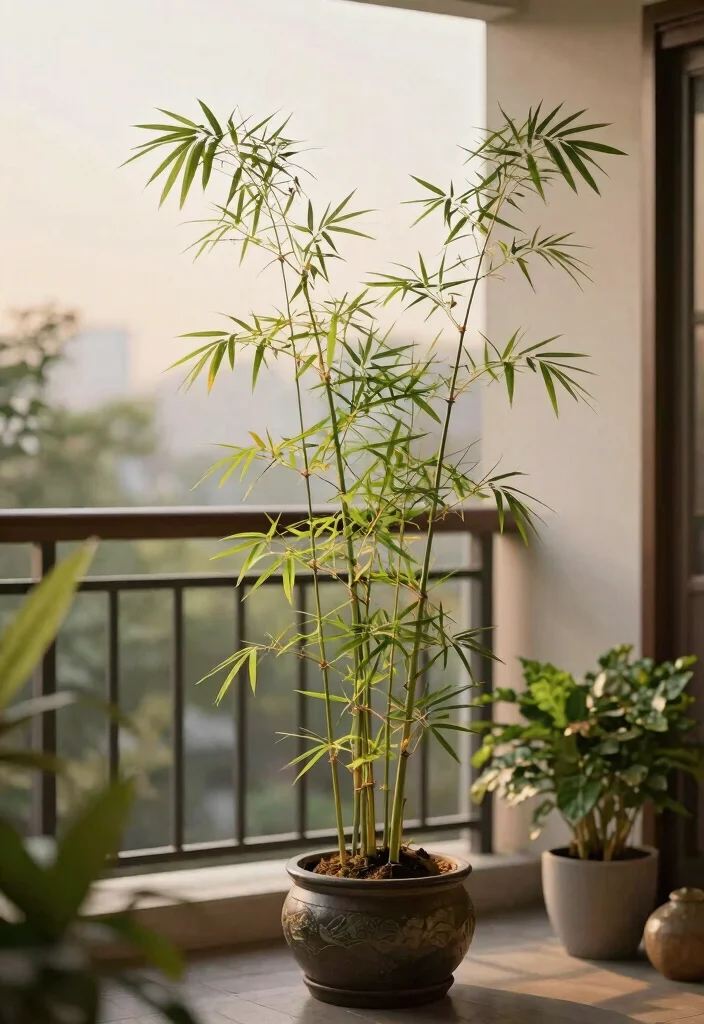
Bamboo adds a serene touch to your balcony garden with its tall, graceful canes and delicate leaves. This plant thrives in low light, making it an excellent choice for shaded corners while creating a peaceful atmosphere.
To keep your bamboo healthy, ensure it has well-draining soil and water it regularly, allowing for slight drying between waterings. Pruning is also essential to control size and promote bushier growth.
Care tips for bamboo:
– Use well-draining soil for best results.
– Water regularly, allowing slight drying.
– Prune frequently for controlled growth.
Bamboo’s elegant presence brings a zen-like quality to your small space.
Fun fact: If you’re exploring balcony plants ideas, bamboo can reach about 4 feet tall in one season with proper care. It thrives in low light, so you can create a serene Zen corner with regular watering, good drainage, and smart pruning.
12. English Ivy – Classic Climber
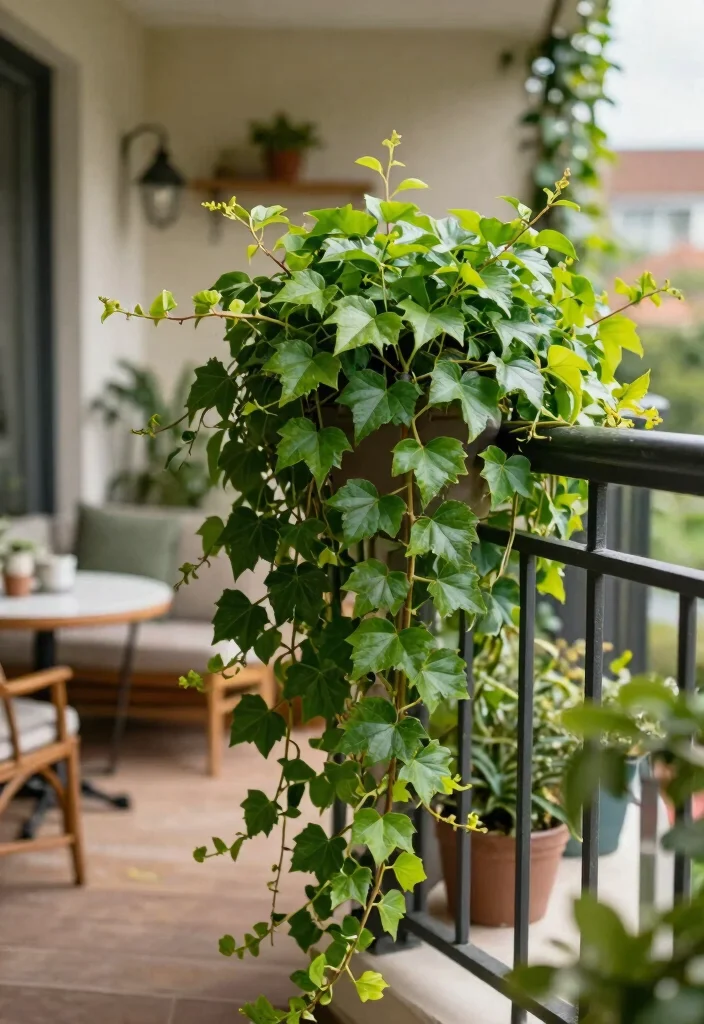
English Ivy is a classic climbing plant that enhances small spaces beautifully. Its vining nature allows for stunning cascades over railings or trellises, creating a visual masterpiece. This plant thrives in low light and is simple to care for, making it ideal for busy urban gardeners.
To care for English Ivy, water it when the top inch of soil feels dry, and trim regularly to encourage fuller growth. Using a trellis or hanging pots allows the vines to reach their full potential.
Care tips for English Ivy:
– Water when the top inch of soil is dry.
– Trim regularly for fuller growth.
– Use trellises or hanging pots to enhance growth.
With its timeless appeal, English Ivy adds nostalgia and beauty to your balcony garden.
13. Boxwood – A Piccolo Hedge
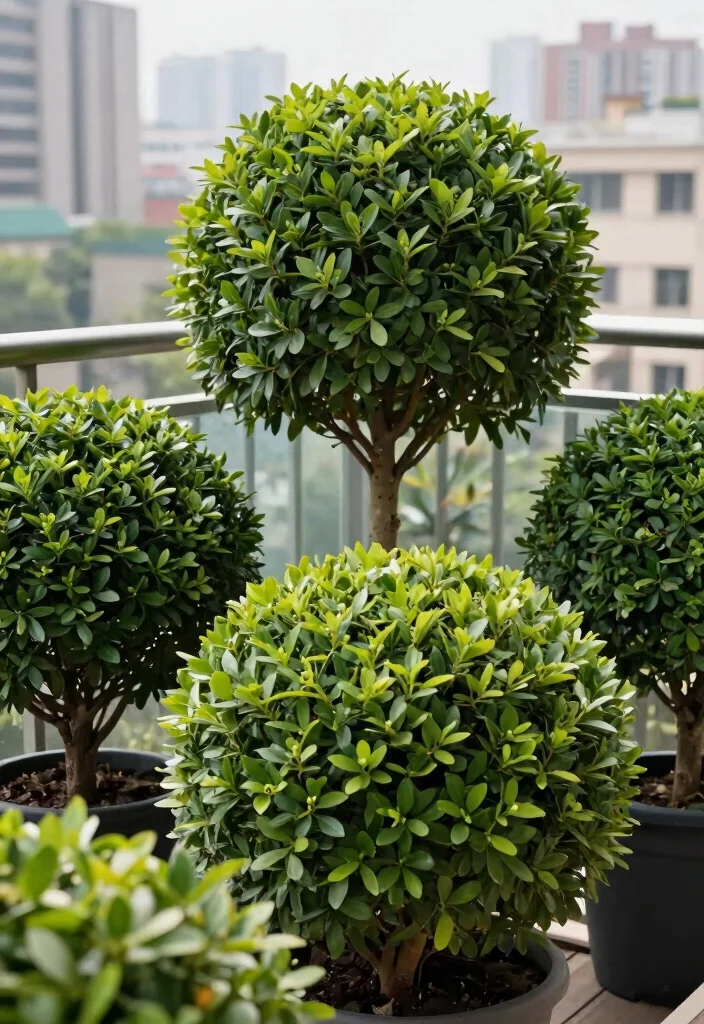
Boxwood is a top choice for small balcony gardens, providing structure and formality. Known for its dense, evergreen foliage, boxwood can be shaped into topiaries or left to grow naturally, offering versatility. They thrive in partial shade, making them suitable for urban environments.
To care for boxwood, ensure the soil is well-draining yet retains some moisture. Regular pruning helps maintain desired shapes, and annual fertilization keeps them healthy.
Essential care tips for boxwood:
– Ensure well-draining soil with moisture retention.
– Prune regularly for desired shapes.
– Fertilize annually for health.
With their classic look, boxwoods enhance the aesthetic appeal of any balcony.
14. Lavender – Fragrant and Beautiful
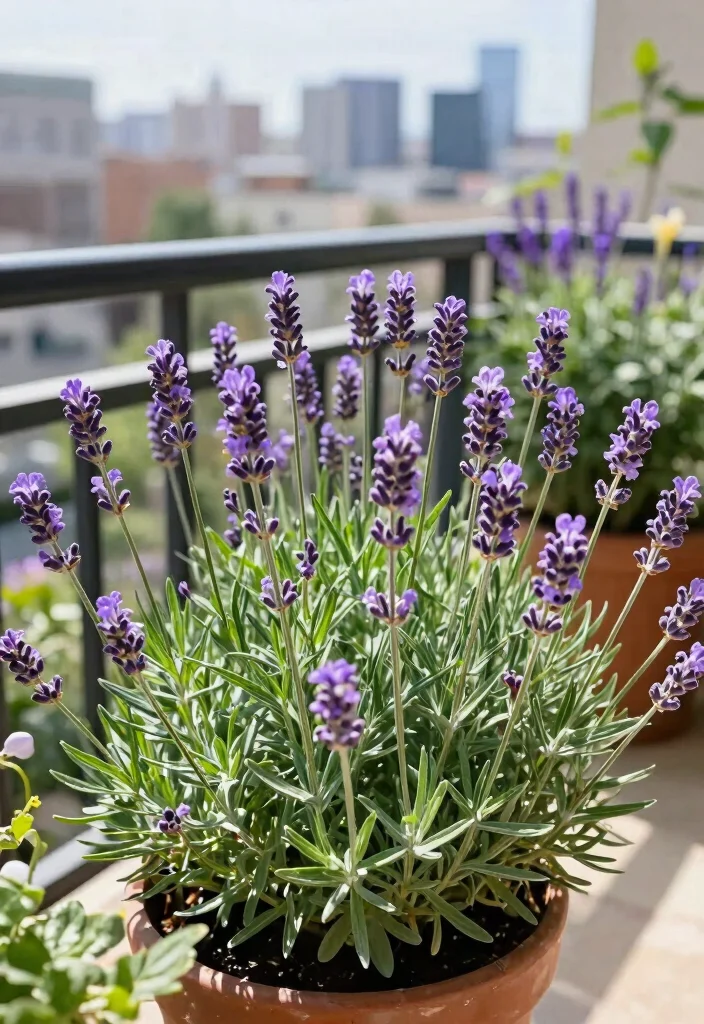
Lavender is not only visually stunning but also adds a delightful fragrance to your balcony. Known for its calming properties, it transforms your outdoor space into a soothing retreat. While lavender prefers sunlight, some varieties can tolerate partial shade, making them suitable for smaller balconies.
To care for lavender, ensure it has well-draining soil to prevent root rot and water it sparingly, as it thrives in drier conditions. Regularly harvesting the flowers encourages new growth and keeps your balcony fragrant.
Care tips for lavender:
– Use well-draining soil to prevent rot.
– Water sparingly; it prefers drier conditions.
– Harvest flowers to promote new growth.
With its stunning blooms and soothing aroma, lavender is a charming addition to your plant collection.
Lavender on a tiny balcony proves balcony plants ideas work, no big yard needed, to create a calming retreat. A little sun, good drainage, and occasional pruning turn even a 4×6 space into a fragrant, low-maintenance haven.
15. Aloe Vera – Healing and Hardy
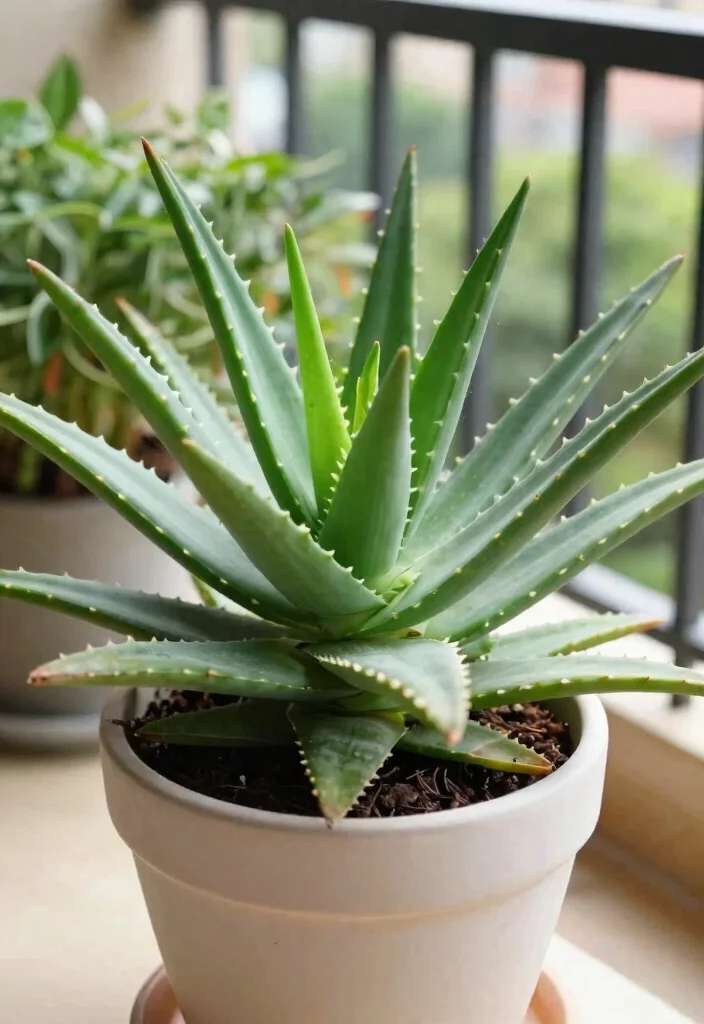
Aloe Vera is renowned for its healing properties and straightforward care, making it an excellent choice for your balcony. This succulent thrives in low light and features thick, fleshy leaves that add architectural interest. Aloe plants are also drought-resistant, perfect for urban dwellers with busy lives.
For optimal care, let the soil dry out completely between waterings and place it in a pot with good drainage. You can also use its soothing gel to treat minor cuts and burns.
Care tips for Aloe Vera:
– Allow soil to dry out completely before watering.
– Use well-draining pots to prevent overwatering.
– Utilize its gel for treating minor injuries.
With its numerous benefits and unique aesthetic, Aloe Vera is both practical and pretty.
Conclusion
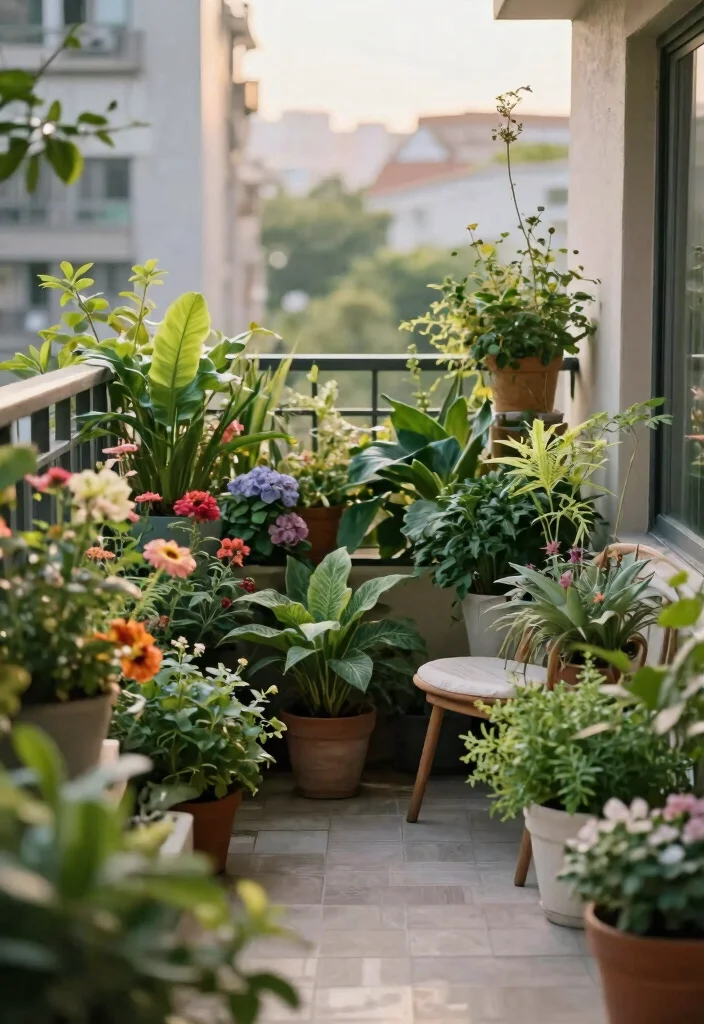
Creating a balcony garden in a small space can be both fulfilling and beautiful. Choosing the right plants that thrive in low light not only enhances your outdoor area but also improves your overall living environment.
Experiment with different species and arrangements to find what suits your style and space best. Gardening is about enjoying the process and bringing a touch of nature into your urban life.
Frequently Asked Questions
What are the best balcony plants ideas for small balconies with low light?
Discover balcony plants ideas that thrive in tight spaces and dim corners. Start with easy, low-maintenance options like snake plant, pothos, ZZ plant, and peace lily in containers. Use vertical planters, hanging baskets, and reflective surfaces to maximize light. Water with a light, well-draining potting mix and ensure each pot has a drainage hole. Rotate plants every couple of weeks so shaded sides get light, and group plants with similar light needs to simplify care. For best results, place sun-loving plants toward brighter edges and shade-tolerant varieties toward the back of your setup.
Tip: consider self-watering containers or moisture-retentive mulch to reduce daily watering in small spaces.
How can I use container gardening on a balcony with limited sun?
On a balcony with limited sun, container gardening shines. Start with shade-tolerant options like pothos, philodendron, peace lily, snake plant, and cast iron plant in containers. Use light-colored pots to reflect light, and consider a small reflective panel to brighten corners. Install vertical racks or railing planters to maximize floor space. Use high-quality potting mix with perlite for drainage, and water regularly without letting soil stay soggy. Add mulch or a moisture-retentive top layer to reduce watering needs. If you have a bright edge, place sun-loving planters there and shade-loving varieties toward the back.
Quick routine: water in the morning, check drainage, and rotate plants monthly.
Which low light plants are easiest to maintain in containers on urban balconies?
Try these reliable options: Snake Plant (Sansevieria), ZZ Plant (Zamioculcas zamiifolia), Pothos, Peace Lily, Cast Iron Plant, and Spider Plant. These low light plants tolerate container life and forgiving watering. Use well-draining pots, a lightweight potting mix, and group plants by water needs to simplify care. Repot when roots fill the container (usually every 1–2 years). Keep pathways clear to avoid spills on a small balcony, and wipe leaves occasionally to remove dust. A quick weekly pest check helps keep them healthy.
With proper care, these plants stay vibrant even in limited light.
What are urban gardening tips for maximizing space on a small balcony while keeping plants healthy?
Here are practical urban gardening tips for balcony success. Go vertical with railing planters and tiered shelves to free floor space. Use weatherproof, lightweight containers with good drainage, and opt for multipurpose potting mix. Group plants with similar water needs and sun exposure to simplify care. Install a small trellis for climbing varieties and use self-watering containers or a drip system to reduce daily watering. Protect plants from wind with guards or windbreaks, and rotate beds to balance sun. Finally, choose container gardening-friendly herbs and greens that thrive in your light conditions for quick wins in small spaces.
How do I care for balcony plants ideas—watering, feeding, and winter care—in small spaces?
Create a simple care routine for your balcony plants ideas. Check soil moisture daily in warm weather and water when the top inch is dry, aiming for consistent moisture but not soggy soil. Use a balanced, slow‑release fertilizer in spring and a light liquid feed every 4–6 weeks during the growing season. Deadhead spent blooms and prune leggy growth to keep things tidy and promote bushier growth. Repot every 1–2 years to refresh soil and prevent rootbound plants. In winter, move sensitive species indoors or shield them with frost cloths and ensure good drainage. Monitor for pests year‑round and wipe leaves as needed. Keep a simple maintenance calendar and adjust as light and temperature change on your balcony.
Related Topics
balcony plants
small space gardening
low light plants
container gardening
urban balcony
easy care plants
indoor gardening
apartment gardening
beginner friendly
green living
vertical gardening
urban gardening tips